 MADE IN USA




Why Shaking White Ink Cartridges Matters in DTF Printing

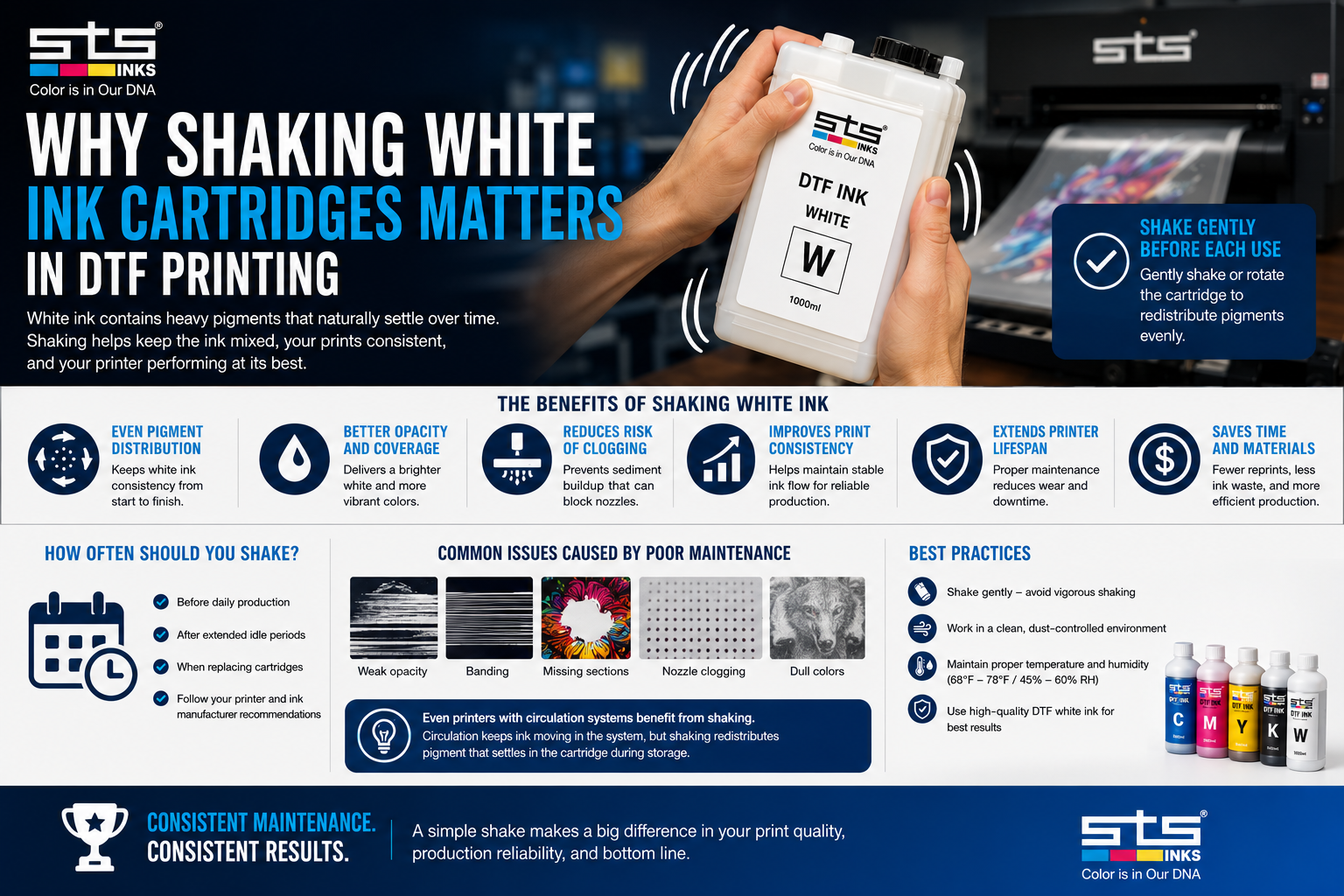
Shaking white ink cartridges in DTF printing
White ink plays one of the most important roles in Direct-to-Film printing. It creates the foundation that allows vibrant colors, sharp details, and strong opacity to appear correctly on garments and other materials. However, unlike standard CMYK inks, white ink requires additional attention and maintenance to perform consistently.
One of the most overlooked yet critical maintenance steps in DTF production is properly shaking white ink cartridges before use.
Failing to manage white ink correctly can lead to print quality issues, clogged nozzles, inconsistent opacity, wasted materials, and costly production downtime.
Why White Ink Behaves Differently
White DTF ink contains heavy titanium dioxide pigments that naturally settle over time. These pigments are significantly heavier than the pigments used in standard cyan, magenta, yellow, and black inks.
As white ink sits idle, the heavier pigment particles begin separating from the liquid carrier solution. This process is completely normal, but it creates uneven ink consistency if not properly managed.
Without agitation, the printer may begin pulling uneven concentrations of pigment through the ink system.
This can result in:
- Inconsistent white coverage
- Poor opacity
- Banding
- Nozzle clogging
- Ink starvation
- Uneven color vibrancy
- Reduced transfer quality
The Importance of Shaking White Ink Cartridges
Gently shaking white ink cartridges helps redistribute settled pigment evenly throughout the ink formulation before printing begins.
This process supports:
- More stable ink flow
- Consistent pigment density
- Better underbase coverage
- Improved print consistency
- Reduced sediment buildup
- Lower risk of clogged nozzles
Even printers equipped with automatic white ink circulation systems still benefit from proper cartridge agitation.
Circulation systems help maintain movement inside the printer, but manual shaking helps reintroduce settled pigment that may collect during storage or idle periods.
How Often Should White Ink Be Shaken?
White ink maintenance schedules may vary depending on the printer model, production volume, and environmental conditions. However, most DTF workflows benefit from routine agitation practices.
General Best Practices
- Shake white ink cartridges before daily production
- Agitate cartridges after extended idle periods
- Follow manufacturer maintenance recommendations
- Avoid letting white ink remain stagnant for long periods
- Verify circulation systems are operating properly
Consistent maintenance is especially important in lower-production environments where printers may sit unused for extended periods.
Proper Way to Shake White Ink
White ink cartridges should always be handled carefully to avoid introducing excessive air bubbles into the system.
Recommended Agitation Method
- Gently rotate or invert the cartridge
- Avoid violent shaking
- Move the cartridge slowly for even pigment redistribution
- Follow manufacturer handling instructions
- Reinstall cartridges securely before printing
Excessive shaking may introduce foam or air bubbles that affect print performance temporarily.
Common Problems Caused by Poor White Ink Maintenance
Many common DTF print issues trace back to inconsistent white ink management.
Potential Problems Include
- Weak white opacity
- Dull colors
- Inconsistent underbase layers
- Missing print sections
- Frequent cleanings
- Nozzle dropouts
- Reduced printhead lifespan
- Increased ink waste
Ignoring white ink maintenance can eventually create more serious production interruptions and costly repairs.
Environmental Conditions Also Matter
Humidity and temperature can also affect white ink stability and overall printer performance.
Recommended Production Conditions
- Temperature: 68°F to 78°F
- Relative Humidity: 45% to 60%
- Clean production environment
- Dust-controlled workspace
Stable environmental conditions help reduce ink drying and maintain smoother ink flow throughout the system.
The Role of High-Quality White Ink
Not all white inks perform equally. Stable formulations designed specifically for DTF production help reduce settling issues while improving flow consistency and print reliability.
High-quality white inks are engineered to provide:
- Strong opacity
- Stable pigment suspension
- Smooth jetting performance
- Reliable circulation compatibility
- Reduced clogging potential
- Consistent transfer results
Using reliable consumables plays a major role in long-term printer performance and production consistency.
Daily White Ink Maintenance Checklist
Implementing a simple maintenance routine can significantly improve production stability.
Daily Checklist
- Shake white cartridges before production
- Perform nozzle checks
- Inspect white ink circulation
- Clean capping stations and wipers
- Monitor humidity and temperature
- Verify proper ink flow
- Avoid unnecessary idle time
Small daily maintenance habits help prevent larger production problems later.
Final Thoughts
White ink is the foundation of successful DTF printing, but it requires proper maintenance to perform consistently.
Gently shaking white ink cartridges before use helps maintain stable pigment distribution, improves print consistency, reduces clogging risks, and supports better overall production reliability.
Combined with proper environmental control, routine maintenance, and high-quality consumables, consistent white ink management helps print shops achieve stronger results, lower downtime, and more dependable DTF production workflows.