 MADE IN USA




DTF Best Practices: How to Improve Print Quality and Production Consistency

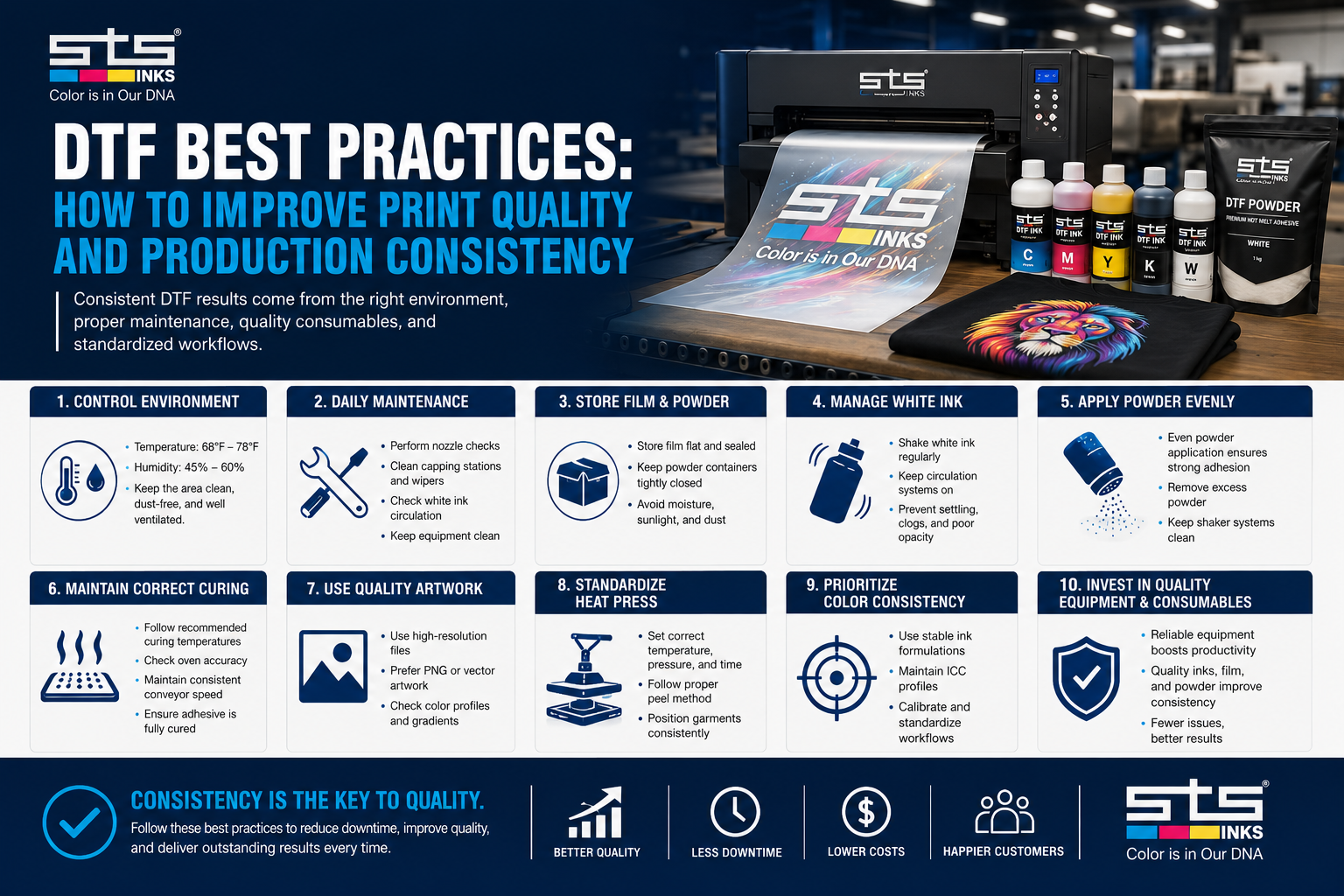
DTF Best Practices: Improve Print Quality and Production Consistency
Direct-to-Film printing continues transforming the apparel decoration industry by allowing businesses to produce vibrant transfers, detailed graphics, and durable prints across a wide variety of fabrics. However, achieving reliable production quality requires more than simply loading film and pressing print.
Consistent DTF results come from proper maintenance, environmental control, correct application settings, and stable production workflows. Even small mistakes can create issues such as banding, poor adhesion, color inconsistency, powder contamination, or transfer failure.
The following DTF best practices can help improve print quality, reduce downtime, and maintain consistent production performance.
Maintain Proper Humidity and Temperature
Environmental conditions play a major role in DTF print performance. Low humidity levels can increase static buildup while excessive humidity may affect powder adhesion and curing consistency.
For most DTF production environments, maintaining stable room conditions helps improve transfer reliability and printer performance.
Recommended Production Environment
- Temperature: 68°F to 78°F
- Relative Humidity: 45% to 60%
- Clean, dust-controlled workspace
- Consistent airflow without direct fan exposure
Stable environmental conditions also help maintain consistent ink viscosity and reduce nozzle drying.
Perform Daily Printer Maintenance
Routine maintenance is essential for preventing nozzle clogs, print defects, and costly downtime. Skipping daily maintenance often leads to inconsistent print quality and reduced printhead lifespan.
Daily DTF Maintenance Checklist
- Perform nozzle checks before production
- Clean capping stations and wiper assemblies
- Inspect printheads for buildup
- Verify white ink circulation systems are operating correctly
- Shake white ink cartridges if required
- Remove excess powder debris near the curing area
- Confirm film feeding properly
Preventive maintenance is significantly less expensive than emergency repairs or production delays.
Properly Store DTF Film and Powder
DTF consumables should always be stored in controlled environments. Moisture exposure or contamination can negatively affect transfer performance and print consistency.
Best Storage Practices
- Store film flat and sealed
- Keep powder containers tightly closed
- Avoid direct sunlight exposure
- Prevent dust contamination
- Rotate inventory using first-in, first-out usage
Contaminated film or powder may lead to adhesion problems, uneven textures, or inconsistent curing.
Optimize White Ink Management
White ink is one of the most critical components within DTF printing. Because white pigments are heavier than standard CMYK pigments, settling naturally occurs over time.
Improper white ink management may result in:
- Nozzle clogging
- Poor opacity
- Inconsistent underbase coverage
- Banding
- Ink starvation
White Ink Best Practices
- Gently agitate white cartridges regularly
- Confirm circulation systems remain active
- Avoid extended idle periods
- Run maintenance cycles when needed
- Use high-quality DTF inks designed for stable pigment suspension
Consistent white ink performance directly impacts overall print quality and color vibrancy.
Apply Powder Evenly
Uneven powder application is one of the most common causes of inconsistent transfer results.
Too little powder may cause poor adhesion while excessive powder can create rough textures, smoke during curing, or unwanted residue.
Powder Application Tips
- Apply powder evenly across the entire print
- Remove excess powder before curing
- Maintain clean shaker systems
- Monitor powder moisture exposure
- Use the correct powder type for the application
Automated powder shaker systems can significantly improve production consistency for higher-volume operations.
Maintain Correct Curing Temperatures
Improper curing directly affects transfer durability, wash resistance, and adhesion quality.
Under-curing may leave adhesive partially activated while over-curing can damage transfer properties and affect stretchability.
Curing Best Practices
- Follow manufacturer-recommended curing temperatures
- Verify oven temperature accuracy regularly
- Maintain consistent conveyor speeds
- Avoid overheating adhesive powder
- Inspect transfers for complete gel curing
Consistent curing creates stronger transfer bonding and improves long-term durability.
Use High-Quality Artwork and Proper Resolution
Print quality starts long before the printer begins production. Low-resolution artwork or incorrect file preparation often leads to blurry details, jagged edges, and poor gradients.
Artwork Recommendations
- Use high-resolution graphics
- Prefer transparent PNG or vector artwork
- Convert fonts to outlines when necessary
- Verify color profiles before production
- Inspect gradients and shadow details carefully
Clean artwork preparation helps maximize the capabilities of professional DTF systems.
Standardize Heat Press Procedures
Even perfectly printed transfers can fail if heat press settings are inconsistent.
Heat Press Variables to Monitor
- Temperature
- Pressure
- Dwell time
- Peel timing
- Garment positioning
Maintaining standardized pressing procedures improves repeatability across production batches and helps reduce customer returns.
Prioritize Color Consistency
Customers expect repeatable color accuracy across reorders and production runs. Color inconsistency may create branding problems and reduce customer confidence.
Improve Color Consistency By:
- Using stable ink formulations
- Maintaining ICC profile consistency
- Calibrating workflows regularly
- Using consistent media types
- Controlling environmental conditions
- Standardizing production settings
Professional DTF workflows rely on consistency just as much as print quality.
Invest in Reliable Equipment and Consumables
Production consistency depends heavily on the quality of the equipment and consumables being used. High-quality inks, films, powders, printers, and shaker systems help reduce production variability while improving workflow efficiency.
Reliable systems also help:
- Reduce downtime
- Improve throughput
- Increase print accuracy
- Lower maintenance frequency
- Produce more repeatable results
Choosing dependable DTF solutions can significantly impact long-term business performance.
Final Thoughts
DTF printing offers exceptional flexibility and production potential, but consistent results require disciplined workflow management and proper maintenance procedures.
By controlling environmental conditions, maintaining equipment, optimizing white ink performance, using quality consumables, and standardizing production processes, print shops can improve output quality while reducing costly interruptions.
As the DTF industry continues evolving, businesses that prioritize consistency, maintenance, and production efficiency will remain better positioned for long-term growth and customer satisfaction.